
Building a Sustainable Future for Healthcare
How the NHS, independent sector and apprenticeships are empowering the healthcare workforce to deliver a sustainable, net-zero future.
Empowering the Healthcare Workforce for a Sustainable Future
As the healthcare sector intensifies its focus on climate action, one message is becoming increasingly clear: achieving net zero will depend not only on technology and infrastructure, but on people. During the recent webinar “Empowering the Healthcare Workforce for a Sustainable Future”, leaders from across the system explored how skills, capability and culture are becoming the driving forces behind greener, more resilient health services.
The conversation, featuring Chris Gormley (Chief Sustainability Officer, NHS England), Lucy Brown (Head of Sustainability & Development Director at Circle Health Group & Centre for Sustainable Healthcare) and Martin Baxter (Deputy CEO, Institute of Sustainability and Environmental Professionals), shone a light on the national priorities, the organisational challenges, and the essential role of workforce development.
Why Sustainability Is Now Core to Healthcare
Healthcare is facing both immediate operational pressures and long-term climate risks. Yet the panel agreed that sustainability is no longer a “nice to have”; it’s fundamental to protecting patient care, improving resilience and reducing harms.
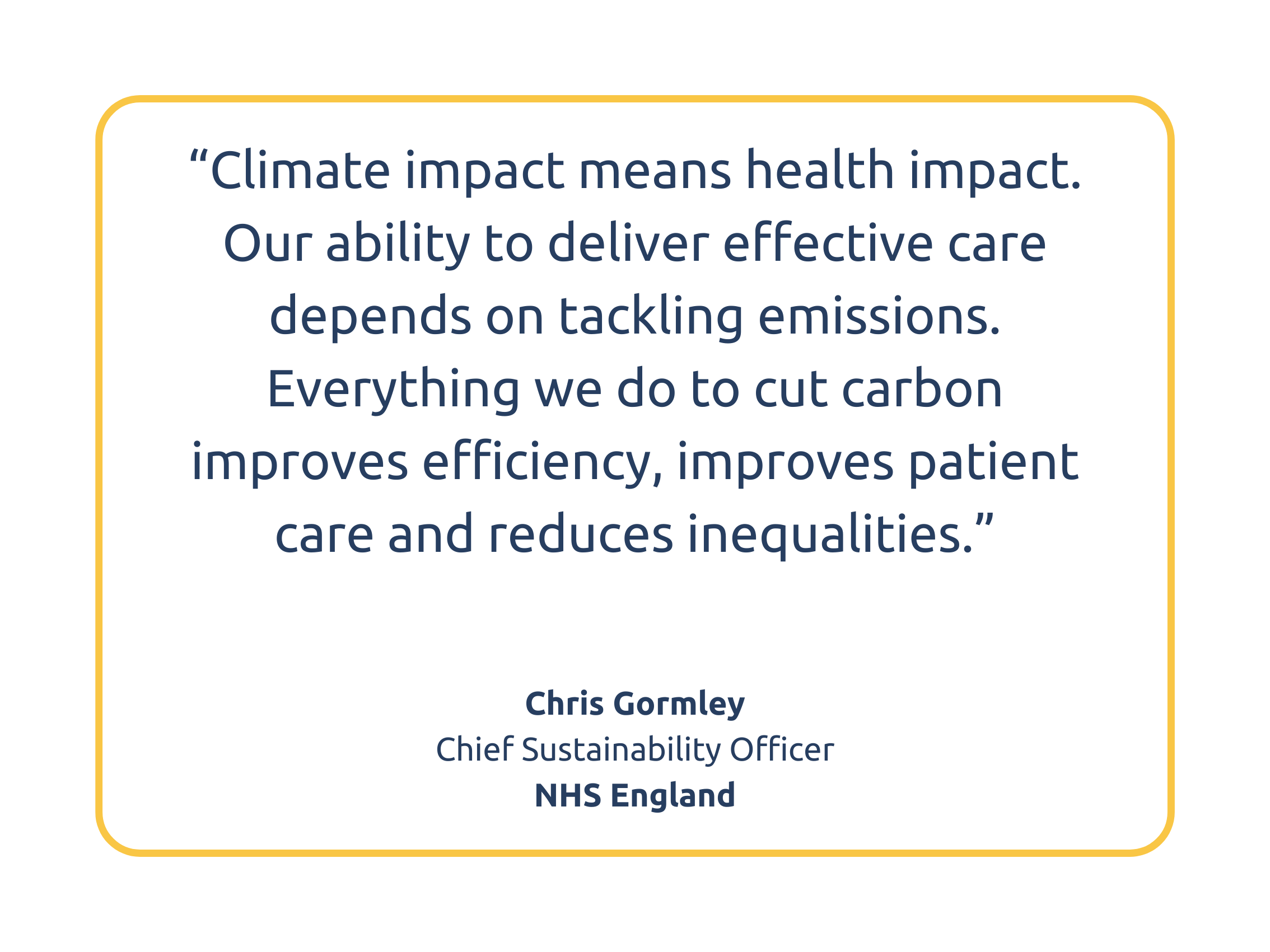
The scale is vast, but so is the opportunity. From multimillion-pound savings on energy to major health benefits associated with cleaner air, sustainability work continues to demonstrate dual impact: reducing emissions while supporting the NHS mission.
Turning Strategy into Action: Sustainability on the Ground
While national targets set the direction, it is staff engagement, education and empowerment that turn ambition into real‑world change.
Circle Health Group has translated strategy into tangible action by focusing on governance, education and culture change, ensuring sustainability is embedded across all 54 sites in the organisation.
A key theme was the importance of dispelling myths, using evidence‑based resources, and creating a sense of collective ownership. Frontline teams often hold the richest insight into where waste, inefficiency or clinical opportunity is hiding.
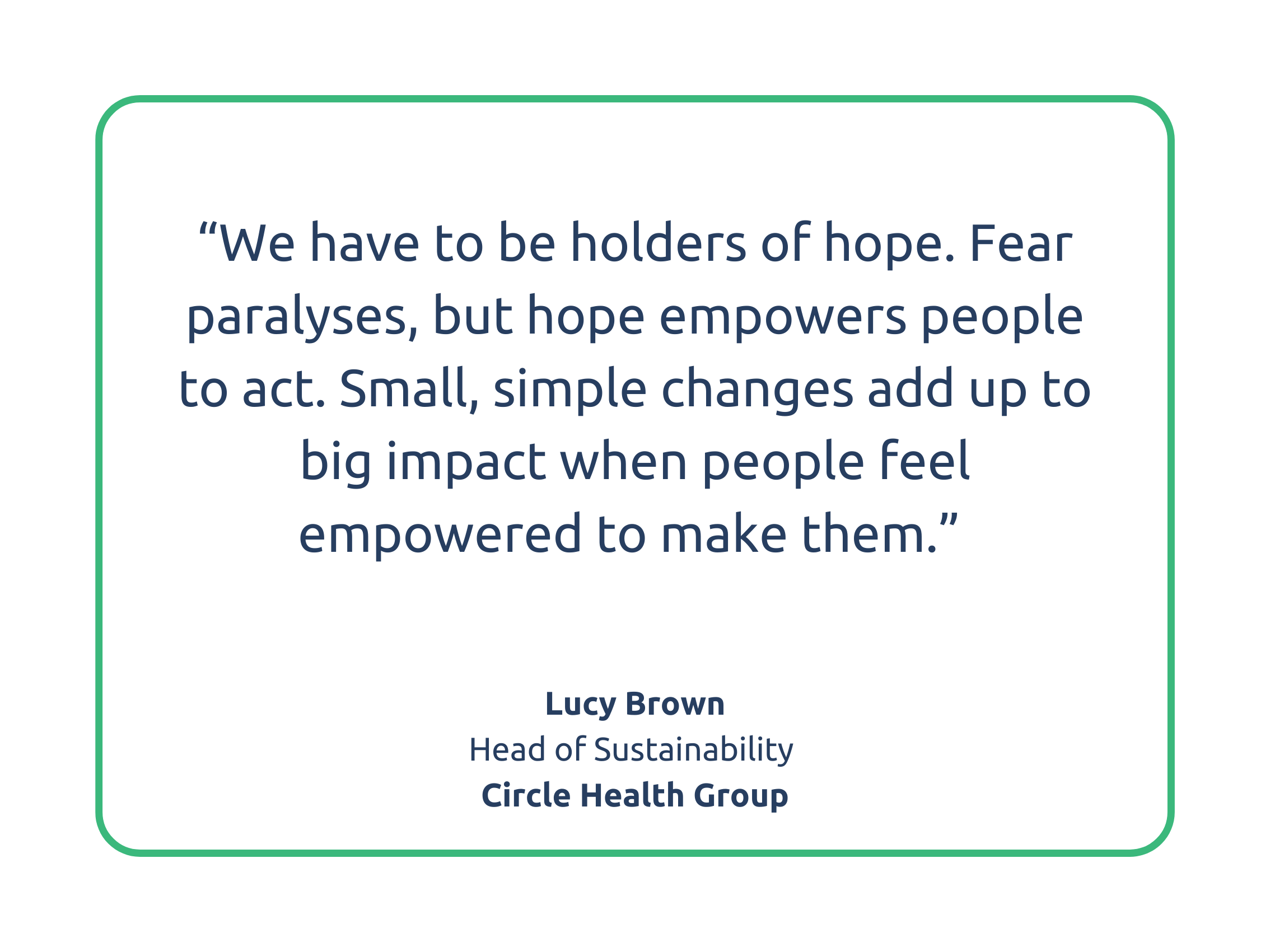
Being able to build an empowered “green army” of site champions demonstrates the importance of visibility, authenticity and practical changes that staff can feel and influence.
Passion Meets Professionalism: The Skills Behind Sustainability
Although passion is a defining trait among sustainability practitioners, the transition from interest to impact requires structured competence. Passion needs to sit on top of a framework of skills, tools and decision-making capability.
ISEP’s Sustainability Skills Map outlines the mix of technical knowledge, systems thinking, leadership and behavioural skills needed to drive sustainable change, skills now essential across all sectors, including healthcare.
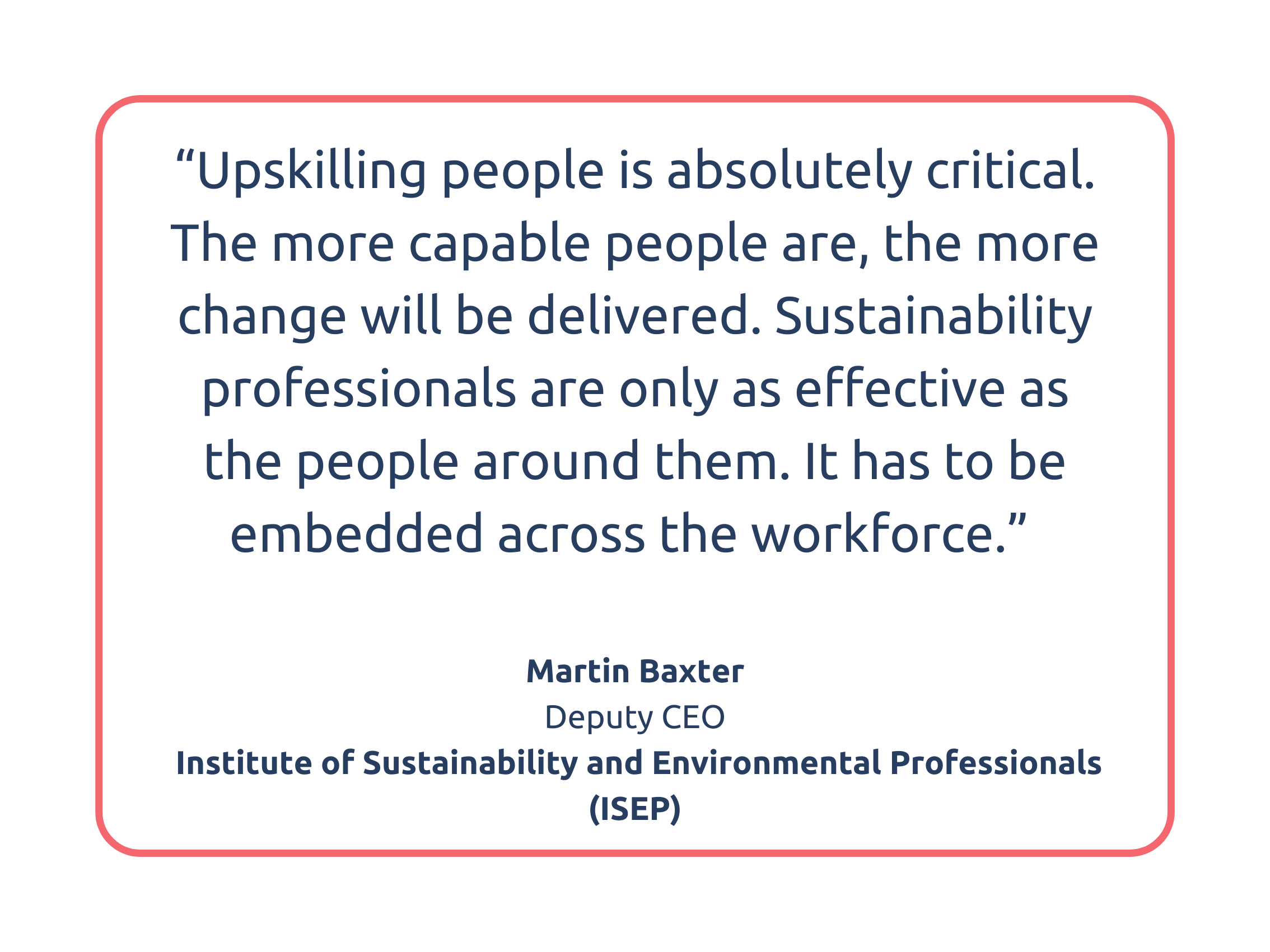
Procurement teams, estates, clinicians, researchers and administrative staff all have a role to play, which is why building organisation-wide capability is so critical. This reflects a systemic shift: sustainability is no longer the responsibility of a single department, but a foundational competency for modern healthcare.
From Strategy to Delivery: The Workforce of the Future
The panel discussed how the NHS and independent sector must now focus not only on developing plans but delivering them. That requires a future workforce equipped with:
An understanding of climate impacts on health
Practical skills in waste reduction, circularity and behaviour change
The confidence to challenge existing processes
Leadership capability at every level
Chris Gormley stressed that the NHS’s progress so far, such as a 14% reduction in direct emissions, is largely thanks to motivated, passionate staff. But with supply chain decarbonisation, adaptation and innovation ahead, the workforce will need continued investment and support.
A Growing Movement: Why Workforce Development Matters
What emerged strongly from the discussion was a sense of collective momentum. Whether through Circle Health Group’s network of sustainability champions, ISEP’s cross‑sector competency frameworks or NHS England’s national programmes, there is growing alignment that sustainability must be embedded into day‑to‑day healthcare work.
And that is precisely why initiatives like the LDN Sustainable Healthcare Academy are becoming so impactful. Bridging national ambition with workforce‑level capability, it creates communities of practice, empowers local innovators and equips staff with the skills needed to deliver measurable change.
Building the Skills for a Healthier, More Sustainable Future
The future of sustainable healthcare won’t be shaped by strategy documents alone. It will be shaped by the people working across the system, including clinicians, managers, porters, administrators, procurement teams, estates teams and many more who are equipped, supported and inspired to make change happen.
If you’re looking to build sustainability skills across your healthcare organisation, or you’re an individual ready to take the next step in your sustainability journey, the LDN Sustainable Healthcare Academy offers a practical, fully funded route to get there.
If you're an NHS trust looking to build sustainability capability across your workforce, you can explore the LDN Sustainable Healthcare Academy and discover how the programme can support your Green Plan ambitions below.
If you work in healthcare beyond the NHS, whether in the independent sector, social care, or another health setting, and would like to find out more, please contact Anna Lou at anna-lou@ldnapprenticeships.com